

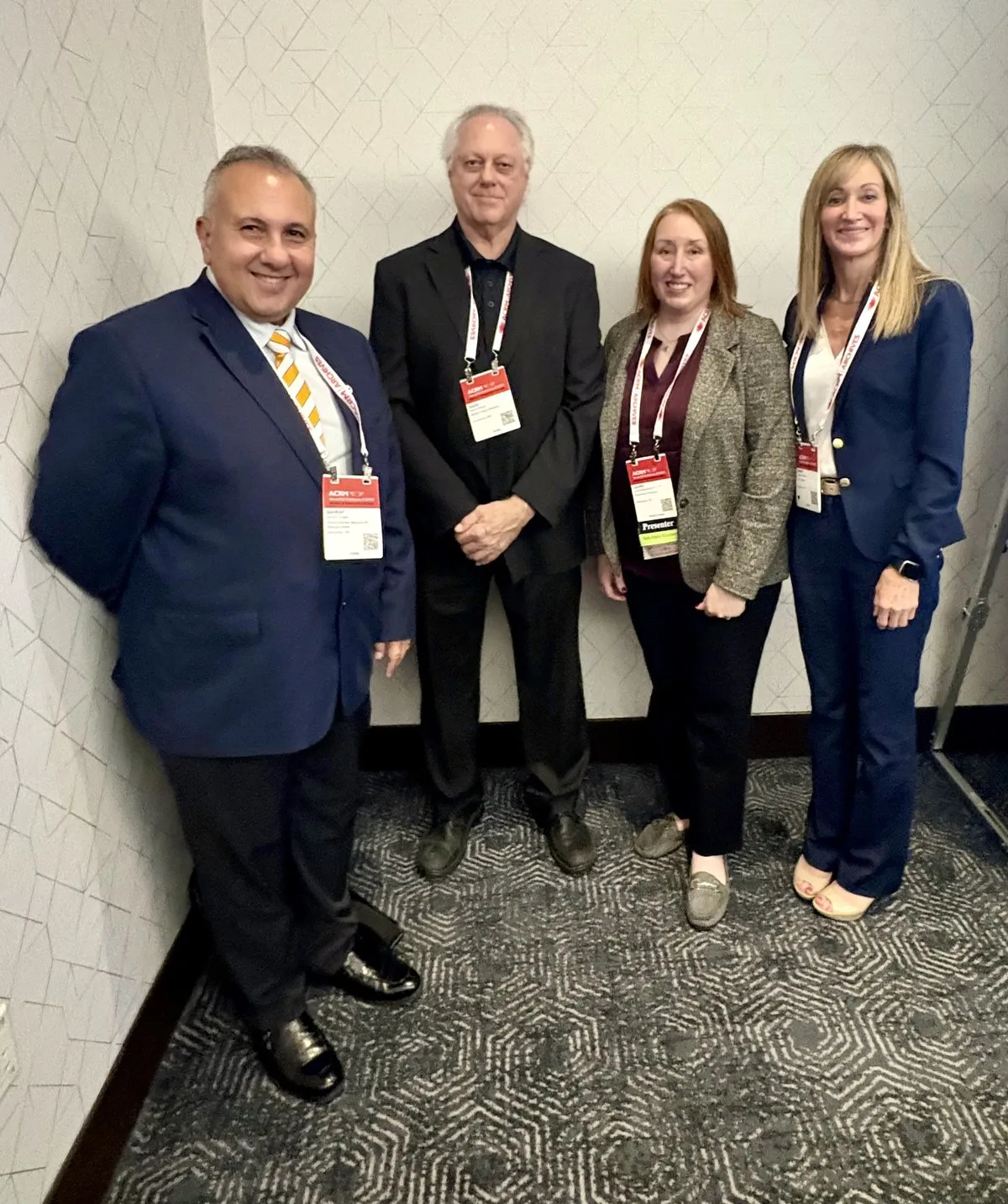
Left to right: Ashraf Gorgey, MPT, PhD; David R. Dolbow, PT, DPT, PhD, RKT; Laurie Magerfleisch, PT, DPT;
and Candy Tefertiller, PT, DPT, PhD at ACRM 2026, Washington, DC.
Functional electrical stimulation has one of the strongest evidence bases in neurorehabilitation, but not every study, poster, or chart shared online deserves equal weight. Whether you are a clinician, a person with a neurological condition, or a caregiver, these five questions will help you evaluate any FES claim.
Laurie Magerfleisch, PT, DPT
Speaker, ACRM 2026
During a recent symposium at the American Congress of Rehabilitation Medicine (ACRM), the audience was asked how frequently they use functional electrical stimulation (FES) in clinical practice. Nearly everyone indicated they use FES daily. However, when asked how many were familiar with a 2021 systematic review of FES cycling by van der Scheer and colleagues, only a few hands went up.
I found this interesting. FES is widely used in neurological rehabilitation, but how familiar are we with the evidence supporting its use? More importantly, do we understand which benefits are well supported and where questions remain?
Over the next several articles, I’ll be reviewing published research on FES cycling, highlighting key findings, limitations, and what they mean for clinical practice.
About the Study
In 2021, van der Scheer and colleagues published a systematic review examining the effects of FES cycling on health and fitness outcomes after spinal cord injury (SCI).
The review included 92 studies involving 999 adults with SCI and evaluated outcomes including muscle health, power output, aerobic fitness, bone health, cardiovascular and metabolic factors, spasticity, and neurological recovery.
Importantly, the authors used the GRADE framework to assess the certainty of evidence for each outcome. This distinction matters because consistent positive findings don’t necessarily mean the evidence is strong.
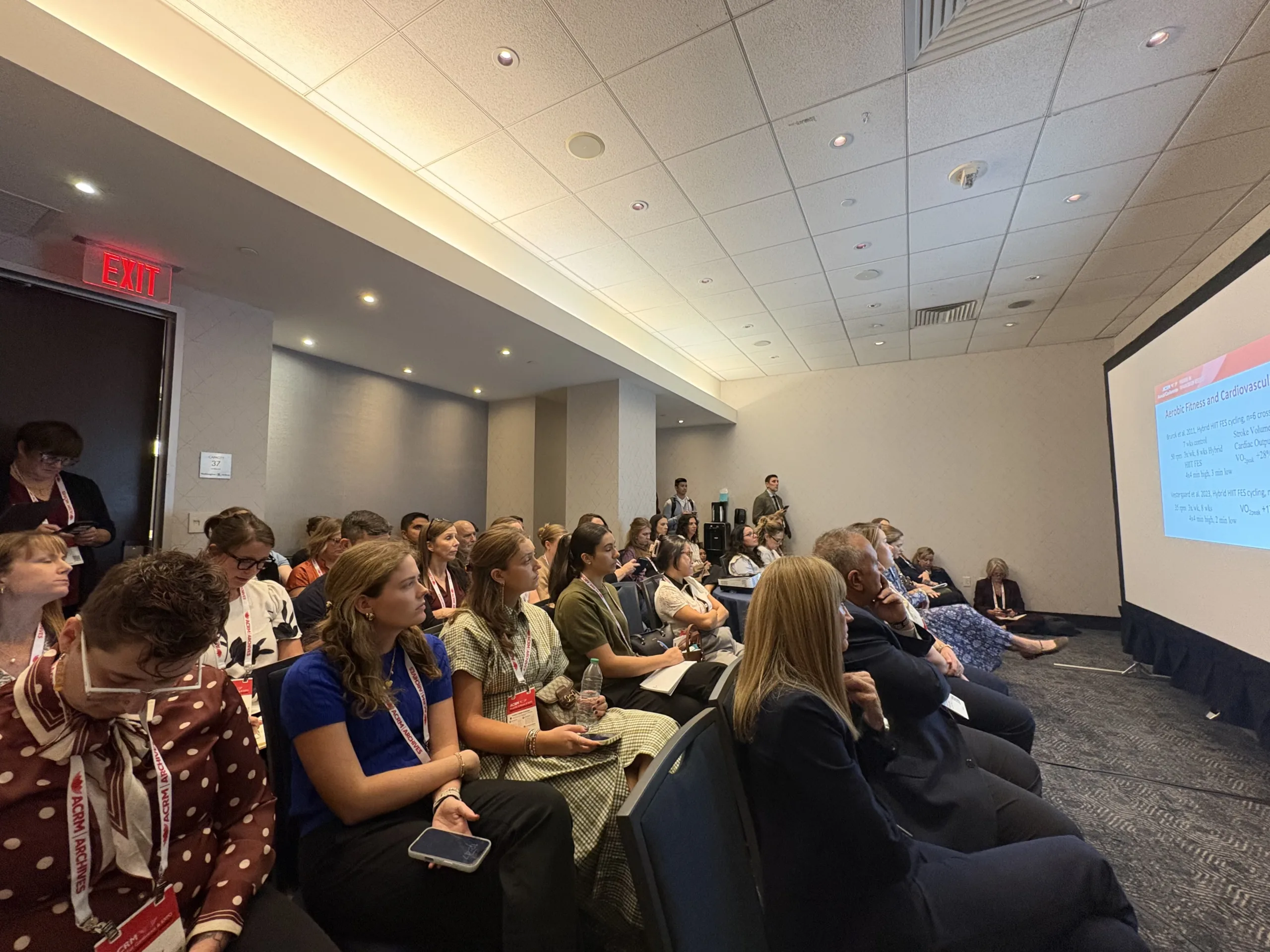
The clinical session on FES cycling and spinal cord injury at ACRM 2026, Washington, DC.
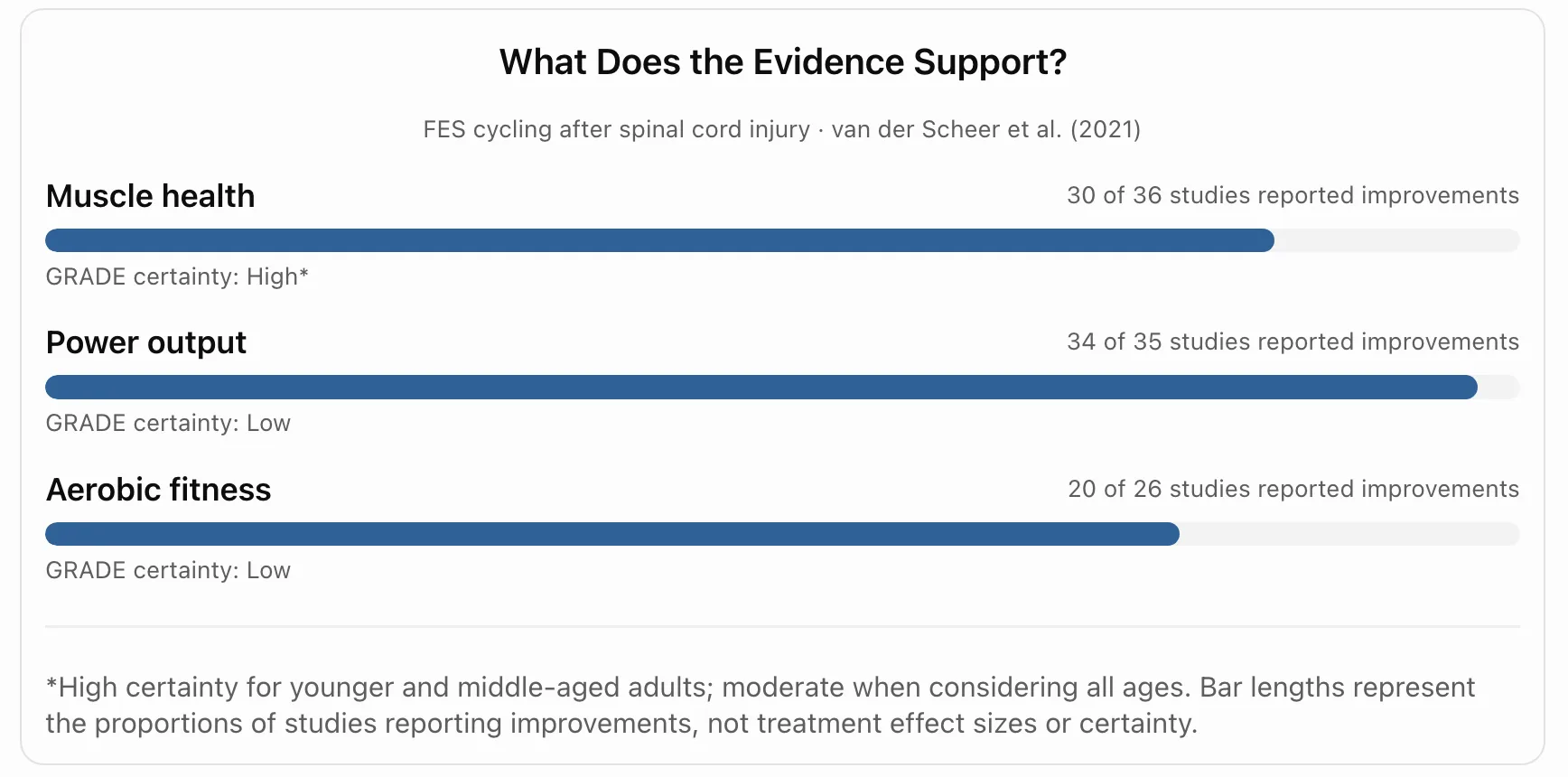
What Does the Evidence Support?
Muscle Health: The Strongest Evidence
Of the 36 studies examining muscle health, 30 reported improvements, including increased muscle volume and changes toward more fatigue-resistant muscle fibers.
The authors rated the certainty of evidence as high for younger and middle-aged adults with SCI, and moderate when considering all ages.
Given the significant muscle atrophy that can occur after SCI, improving lower-extremity muscle health is one of the best-supported reasons to incorporate FES cycling into an exercise program.
Power Output and Aerobic Fitness: Promising Findings
Improvements in power output were reported in 34 of 35 studies, while 20 of 26 studies examining aerobic fitness reported positive findings, including improvements in peak oxygen uptake.
Despite these consistent findings, the certainty of evidence for both outcomes was rated as low, primarily because of limitations in study design and reporting.
Low certainty doesn’t mean FES cycling is ineffective. It means we have less confidence in the estimated effects.
Clinically, these findings support tracking individual responses to training, including power output and exercise tolerance, while recognizing that improved cycling performance doesn’t automatically mean an individual is meeting aerobic exercise recommendations.
What About Other Potential Benefits?
FES cycling has also been studied for its effects on bone health, spasticity, cardiovascular and metabolic health, and neurological recovery. However, the review rated the certainty of evidence for these outcomes as very low.
For example, 11 of 23 studies examining bone health reported improvements, but findings were inconsistent. The authors noted that interventions may have been too short to detect skeletal adaptations.
Similarly, while some studies reported improvements in secondary health conditions and functional outcomes, the evidence was limited or inconsistent. This doesn’t mean these benefits aren’t possible. It means we need more high-quality research before making strong claims about them.
What Does the Research Tell Us About Exercise Dosage?
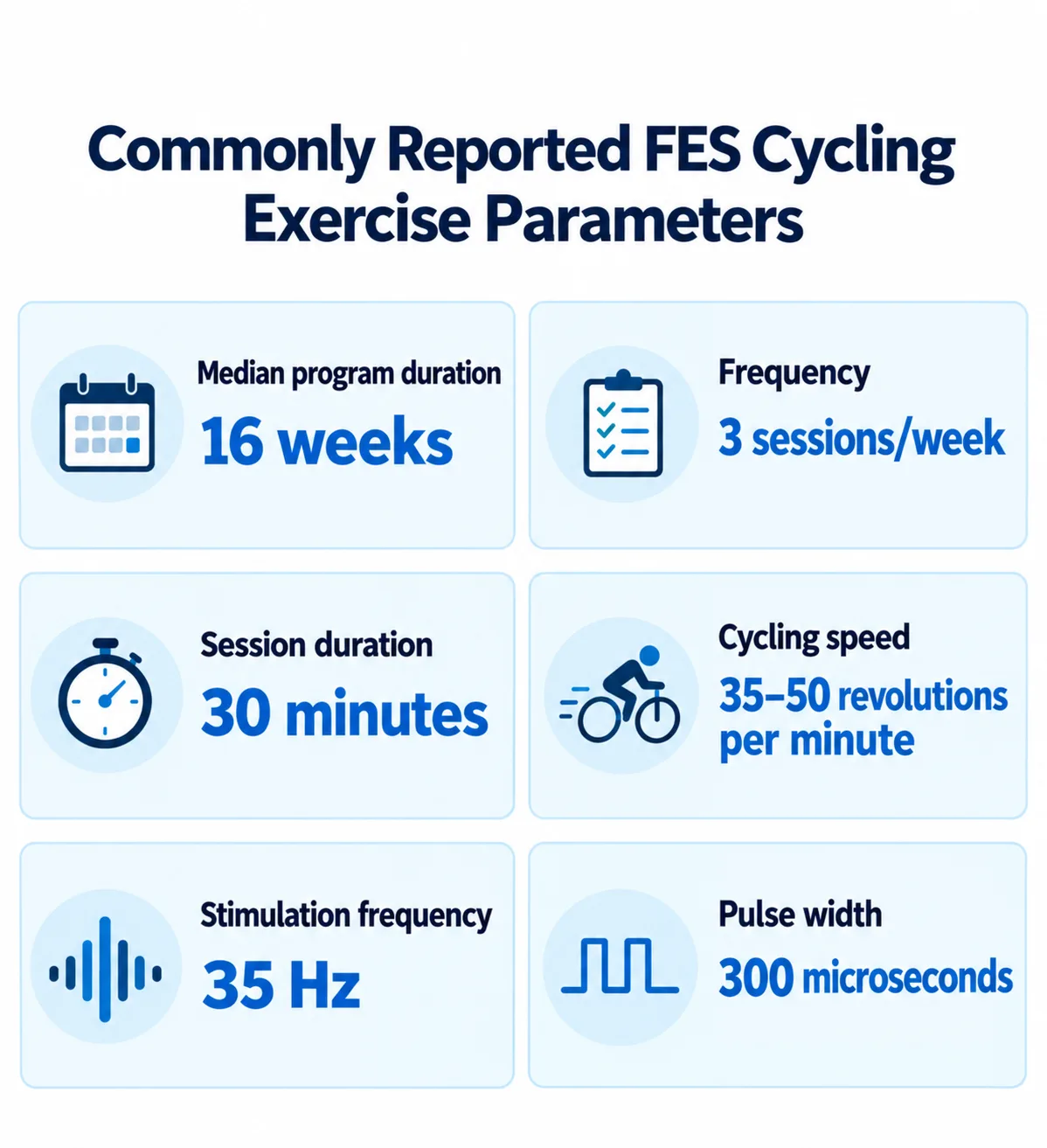
One useful aspect of the review was its summary of exercise protocols used across the studies.
These values represent commonly used research protocols, not established optimal treatment parameters. The authors identified a need for additional research on exercise dosage, stimulation characteristics, progressive overload, and managing muscle fatigue.
From a clinical perspective, completing 30 minutes of cycling doesn’t necessarily tell us how much active work was performed or whether the exercise was sufficiently challenging. Monitoring performance and progressing the program according to the individual’s response are important considerations.
Safety and Limitations of the Evidence
Although the review included a substantial number of studies, much of the research involved small sample sizes, lacked control groups, or used relatively short interventions. There was also considerable variability in exercise protocols and outcome measures, making it difficult to compare results across studies.
Women, older adults, and individuals with motor-incomplete injuries were underrepresented.
Safety reporting was another limitation. Only 21 studies reported adverse-event information, representing 203 participants. Eighteen experienced suspected adverse reactions, including temporary hypotension, increased spasticity, skin redness, and autonomic dysreflexia. One potentially serious hematoma was reported, although its relationship to FES cycling was uncertain.
While the authors suggested that harmful reactions were unlikely, inconsistent reporting means these findings should be interpreted cautiously. Appropriate screening, individualized setup, and monitoring remain essential.
What Does This Mean for Clinical Practice?
The strongest evidence supports improvements in lower-extremity muscle health following FES cycling. Improvements in power output and aerobic fitness are consistently reported, although the certainty of evidence is lower. For other outcomes, additional research is needed.
For clinicians, this reinforces the importance of establishing clear treatment goals, selecting appropriate outcome measures, and monitoring progress, rather than assuming every potential benefit will occur simply because someone is cycling.
For individuals using FES cycling, it means understanding that benefits may vary depending on injury characteristics, exercise dosage, and consistency of training.
Final Thoughts
The van der Scheer review highlights the substantial research supporting FES cycling while identifying important gaps in our knowledge.
For me, the key takeaway is that FES cycling shouldn’t simply be something we do. It should be an intervention we prescribe with a clear purpose, measurable goals, and an understanding of the evidence supporting those goals. As the research evolves, our clinical approach should evolve with it.
This article opens RTI’s FES Research Review series. In the next installment, I’ll take a closer look at FES cycling and muscle health after spinal cord injury, examining what researchers measured, what the findings mean, and which questions remain unanswered.
Reference
van der Scheer, J. W., Goosey-Tolfrey, V. L., Valentino, S. E., Davis, G. M., & Ho, C. H. (2021). Functional electrical stimulation cycling exercise after spinal cord injury: A systematic review of health and fitness-related outcomes. Journal of NeuroEngineering and Rehabilitation, 18, Article 99. https://doi.org/10.1186/s12984-021-00882-8
Want to learn more about how the RT300 and Xcite2 therapy systems can improve patient outcomes?
Visit restorative-therapies.com to explore how Restorative Therapies supports clinicians and patients in the neurorecovery journey. Explore how the RT300 and Xcite2 therapy systems bring integrated FES into cycling and task-specific functional activity.
Contact Restorative Therapies to schedule a demonstration or clinical in-service. Outside the US? See our international page.
We are your advocate for life.