

Look at the weight of evidence
When a company publishes a comparison of its product against the RT300, the first question any clinician should ask is: what does the literature actually say?
The RT300 has more than 20 years of peer-reviewed research behind it. That includes randomized controlled trials, longitudinal outcome studies, and published clinical protocols across neurological conditions such as stroke, SCI, MS, TBI, and more. The evidence base is not anecdotal. It is the foundation on which thousands of clinicians have built their FES cycling programs.
Myolyn’s MyoCycle, by contrast, is supported by a single poster presentation, four (4) participants. That is not a clinical study. It is a preliminary data point. Presenting it alongside decades of RT300 research as if they are comparable obscures a meaningful distinction that clinicians deserve to understand.
When you evaluate any FES system, ask to see peer-reviewed, published evidence, and look beyond the surface.
Adaptability is a clinical feature, not a bug
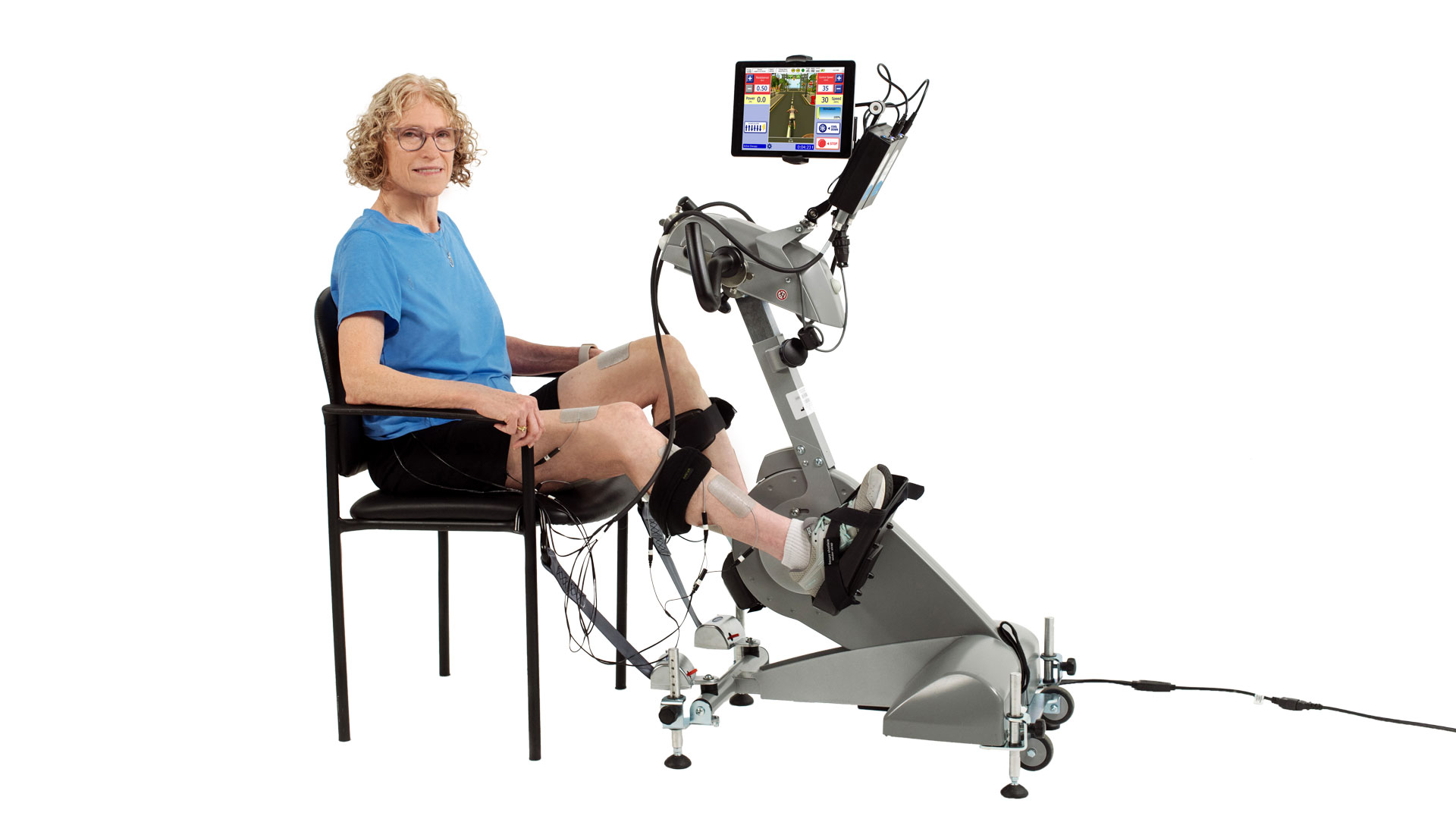
Clinicians treating neurorehabilitation patients know that no two presentations are alike. The RT300 was designed with that reality in mind. Its clinical flexibility includes:
- 12 stimulation channels for a variety of full-body FES cycling protocols
- Adjustable cycling speed (15–55 RPM) to meet patient tolerance and therapeutic goals
- Upper and lower limb configurations, including combined UE/LE protocols, and core muscle groups.
- SAGE mode for patients who need supported or passive-assist cycling
- Adult and pediatric configurations within a single system
These aren’t product features listed to win a spec sheet comparison. They reflect what clinicians have asked for and what outcomes have required over 20+ years of clinical deployment.
Safety and progression require intelligent engineering
FES cycling is not passive exercise. Electrical stimulation interacts with individual physiology in ways that require real-time responsiveness. The RT300 incorporates engineering designed specifically to address those dynamics:
- Active Spasm Management: Detects and responds to involuntary spasms during a session, maintaining patient safety without interrupting therapy
- Automatic progression: Adapts stimulation parameters as patient capacity changes, reducing manual clinician burden during sessions
- Remote monitoring capability: Allows oversight and data review without requiring on-site presence for every session
- Wide-pulse stimulation: Enables more comfortable and effective recruitment for patients with higher stimulation thresholds
These are not optional add-ons. They are clinical infrastructure that supports safe, progressive therapy delivery across a wide patient population.
The real cost of an FES system is measured in support
Purchase price is one line item. The total cost of deploying and sustaining an FES program is another conversation entirely.
RT300 users have access to clinical training resources, reimbursement support, and a team with direct experience helping facilities build and scale FES cycling programs. That infrastructure matters, especially for programs that are launching for the first time or expanding to new patient populations.
When evaluating any FES system, ask the vendor: What does implementation actually look like? What happens when I have a clinical question six months from now? What is the pathway if a patient’s needs change?
The answers reveal what kind of partner you are choosing, not just what kind of device.
Who clinicians trust
The RT300 is used in 9 of the top 10 U.S. rehabilitation hospitals, 45 of the top 50, VA medical centers across the country, and more than 30 countries worldwide. That reach reflects something beyond market penetration. It reflects sustained clinical confidence earned through outcomes, reliability, and support over time.
When a facility chooses an FES system, they are choosing a long-term clinical partner. The RT300’s track record across the most demanding rehabilitation environments in the world is evidence of what that partnership looks like in practice.
The bottom line
The RT300 is an FDA-cleared Class II medical device with a 20+ year evidence base, deployed across the world’s leading rehabilitation institutions. Clinicians evaluating FES cycling systems should expect the same standard of evidence, adaptability, and support from any system they consider and should not settle for marketing comparisons that substitute selective framing for clinical rigor.
Want to learn more about how the RT300 and Xcite2 therapy systems can improve patient outcomes?
Visit restorative-therapies.com to explore how Restorative Therapies supports clinicians and patients in the neurorecovery journey. Explore how the RT300 and Xcite2 therapy systems bring integrated FES into cycling and task-specific functional activity.
Contact Restorative Therapies to schedule a demonstration or clinical in-service. Outside the US? See our international page.