

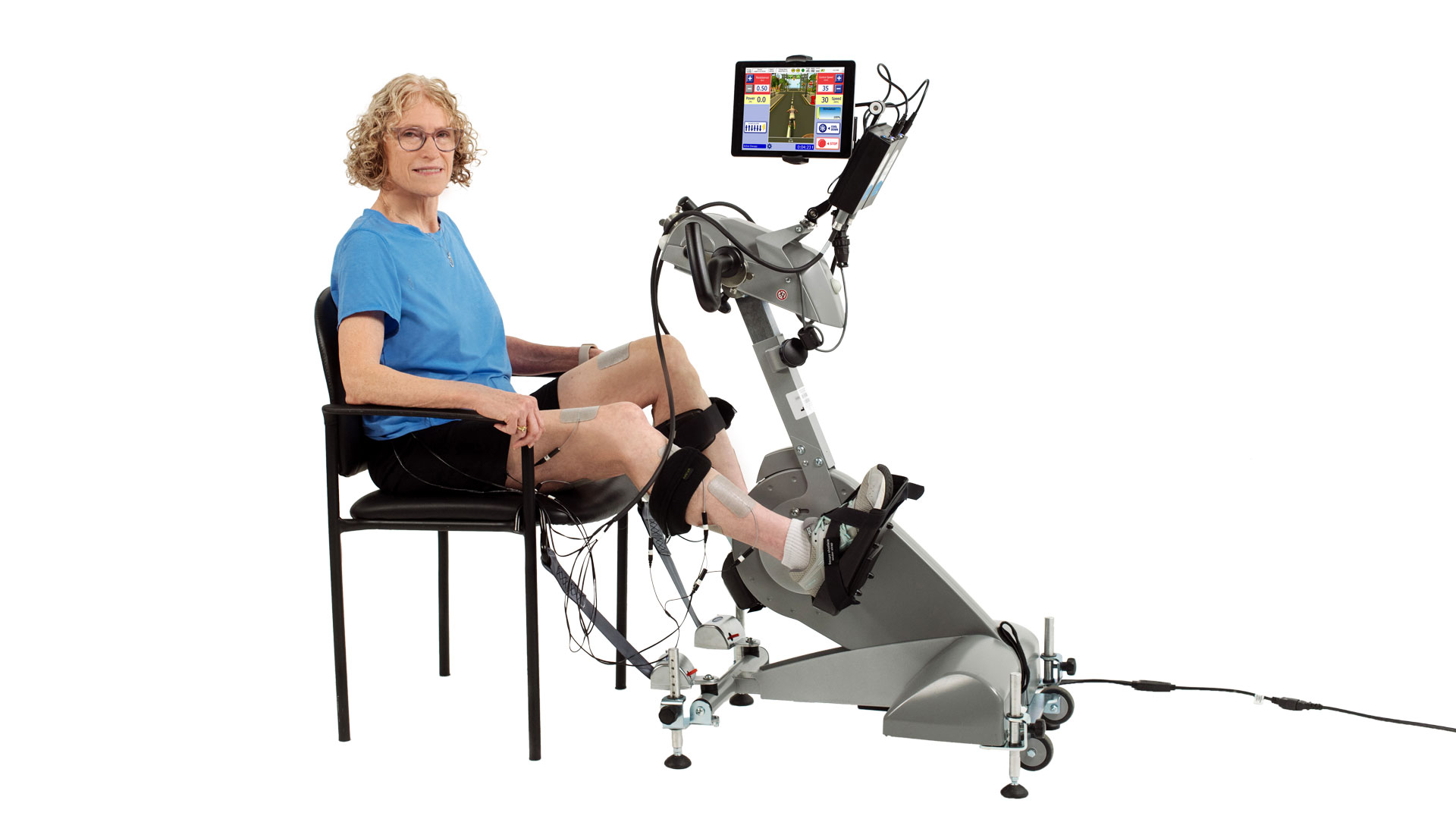
Lower Limb Spasticity Is More Than a Movement Problem
Lower limb spasticity is involuntary muscle stiffness in the legs following neurological injury, disrupting far more than gait mechanics. It increases co-contraction, reduces mechanical efficiency, elevates the energy cost of movement, and limits the intensity a patient can sustain during cardiovascular exercise. For many individuals living with spinal cord injury, stroke, or multiple sclerosis, this becomes a primary barrier to mobility, rehabilitation progress, and long-term health.
Building on our recent discussion of upper limb spasticity management, the same clinical principles apply to the lower limb, with greater stakes for function and overall health.
Before progressing directly to strengthening or gait retraining, clinicians should consider a more important question:
Are we preparing the nervous system for movement, or forcing movement onto a dysregulated system?
A Structured Framework: Prime → Reduce → Perform
A more clinically defensible framework for lower limb spasticity management includes three phases.
1. Prime the Nervous System: Modulate Neural Input and Motor Readiness
The goal is not simply to “relax tone.” The goal is to influence neural excitability and improve readiness for movement.
Integrated Functional Electrical Stimulation (FES) cycling with the RT300 provides:
- High-repetition rhythmic activation
- Alternating reciprocal movement patterns
- Sustained afferent input to spinal and supraspinal pathways
Emerging evidence suggests that repeated FES cycling may influence reflex excitability and reduce spasticity in some individuals, particularly when delivered at sufficient frequency and duration. Stronger outcomes are generally observed in programs lasting 12 to 16 weeks or longer.
Additional sensory strategies, such as weight bearing, vibration, and cutaneous input, may further support neuromodulation through:
- Modulation of spinal reflex activity
- Improved timing of motor unit recruitment
- Increased motor readiness for functional training
This priming phase creates a more efficient neurological environment before introducing demanding motor tasks.
2. Reduce: Improve Selective Motor Control
Once the nervous system is primed, FES can be applied to improve movement quality through more selective muscle activation. This directly addresses one of the core impairments associated with spasticity: impaired motor control.
Examples include:
- FES to the tibialis anterior for foot clearance during gait
- Quadriceps activation for improved stance stability
- Hip flexor and hamstring facilitation for swing phase control
- Gluteal activation for pelvic stability and posture
- Sensory stimulation to the hip abductors for reduced scissoring gait
Current literature supports FES for improving gait speed, symmetry, and functional mobility outcomes, even when direct effects on spasticity itself are inconsistent.
This reinforces an important clinical point:
The primary target is improved motor output, not simply reduced tone.
3. Perform: Access Intensity and Meaningful Training
This is where the most meaningful clinical impact occurs, and where many rehabilitation programs fall short.
Spasticity contributes to inefficient force production, increased metabolic cost of movement, and reduced exercise tolerance. When neural input and motor control improve, co-contraction decreases, force production becomes more efficient, and patients can tolerate higher workloads.
FES cycling is particularly valuable because it allows individuals with limited voluntary activation to achieve:
- High repetition volumes
- Moderate-to-vigorous cardiovascular intensity
- Improvements in aerobic capacity and muscle health
A systematic review of FES cycling after spinal cord injury demonstrated measurable improvements in fitness-related outcomes and physical performance. Unlike many traditional interventions, these outcomes are consistently supported in the literature and strengthen the argument for integrating FES into long-term neurological rehabilitation.
Reframing the Goal of Spasticity Management
Spasticity management should not be viewed as the endpoint of rehabilitation.
FES can reduce lower-limb spasticity, but the effect is dose-dependent, with stronger outcomes observed in programs of 12 weeks or longer. Improvements in motor function, muscle health, and cardiovascular conditioning have stronger and more consistent supporting evidence.
The implication for clinical practice is clear:
FES is not simply a tool to reduce tone. It is a tool that can help clinicians improve movement quality, increase rehabilitation intensity, and expand access to meaningful functional training.
Why Integrated FES Matters in Neurological Rehabilitation
Integrated Functional Electrical Stimulation (FES) technologies such as the RT300 and Xcite2 are designed to support:
- Muscle re-education
- Relaxation of muscle spasms
- Prevention of disuse atrophy
- Increased local blood circulation
- Maintenance or increase of range of motion
These are FDA-cleared indications for Restorative Therapies’ therapy systems. Our evidence-based research summaries demonstrate growing support for FES interventions across spinal cord injury, stroke, multiple sclerosis, and pediatric neurological populations.
Bottom Line
If rehabilitation stops at reducing spasticity, the opportunity is being underutilized. The broader goal should be to:
- Improve motor control
- Increase training intensity
- Expand access to task-specific movement
- Support long-term health and performance
Spasticity management is most effective when it becomes a bridge to function, performance, and participation, not the destination.
Frequently Asked Questions About Integrated FES for Lower Limb Spasticity
Can FES help reduce lower limb spasticity?
Research suggests FES cycling and task-specific stimulation may reduce lower limb spasticity in some individuals, particularly when performed consistently over longer durations. Outcomes vary based on diagnosis, training frequency, and intervention intensity, with stronger effects typically observed in programs of 12 weeks or more.
How does FES cycling support neurological rehabilitation?
FES cycling combines repetitive movement with patterned muscle activation to support neuromuscular training. Studies have demonstrated improvements in mobility, muscle health, cardiovascular conditioning, and functional performance in populations including spinal cord injury, stroke, and multiple sclerosis.
For broader questions about integrated FES therapy solutions, see our Patient FAQs.
References
- Li G, Shourijeh MS, Ao D, Patten C, Fregly BJ. “How Well Do Commonly Used Co-contraction Indices Approximate Lower Limb Joint Stiffness Trends During Gait for Individuals Post-stroke?” Frontiers in Bioengineering and Biotechnology, vol. 8, 2021. doi:10.3389/fbioe.2020.588908
- Alashram AR, Annino G, Mercuri NB. “Changes in Spasticity Following Functional Electrical Stimulation Cycling in Patients with Spinal Cord Injury: A Systematic Review.” The Journal of Spinal Cord Medicine, vol. 45, no. 1, 2022, pp. 10-23. doi:10.1080/10790268.2020.1763713
- Fang CY, Lien AS, Tsai JL, et al. “The Effect and Dose-Response of Functional Electrical Stimulation Cycling Training on Spasticity in Individuals With Spinal Cord Injury.” Frontiers in Physiology, vol. 12, 2021. doi:10.3389/fphys.2021.756200
- van der Scheer JW, Goosey-Tolfrey VL, Valentino SE, Davis GM, Ho CH. “Functional Electrical Stimulation Cycling Exercise After Spinal Cord Injury.” Journal of NeuroEngineering and Rehabilitation, vol. 18, no. 99, 2021. doi:10.1186/s12984-021-00882-8
- Galvão WR, Castro Silva LK, Formiga MF, et al. “Cycling Using Functional Electrical Stimulation Therapy to Improve Motor Function and Activity in Post-stroke Individuals in Early Subacute Phase.” BioMedical Engineering OnLine, vol. 23, no. 1, 2024. doi:10.1186/s12938-023-01195-8
Want to learn more about how the RT300 and Xcite2 therapy systems can improve patient outcomes?
Visit restorative-therapies.com to explore how Restorative Therapies supports clinicians and patients in the neurorecovery journey.


