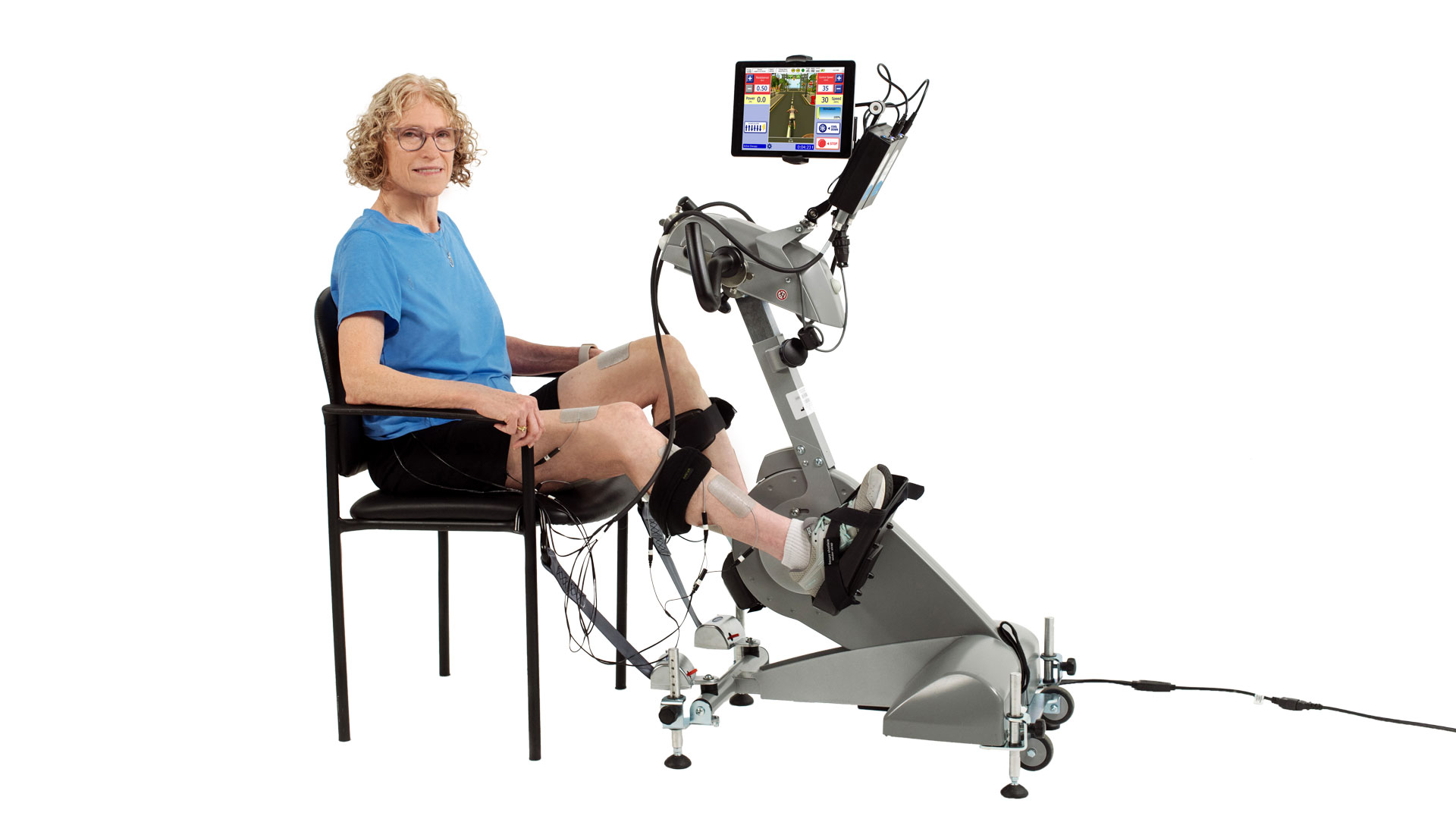

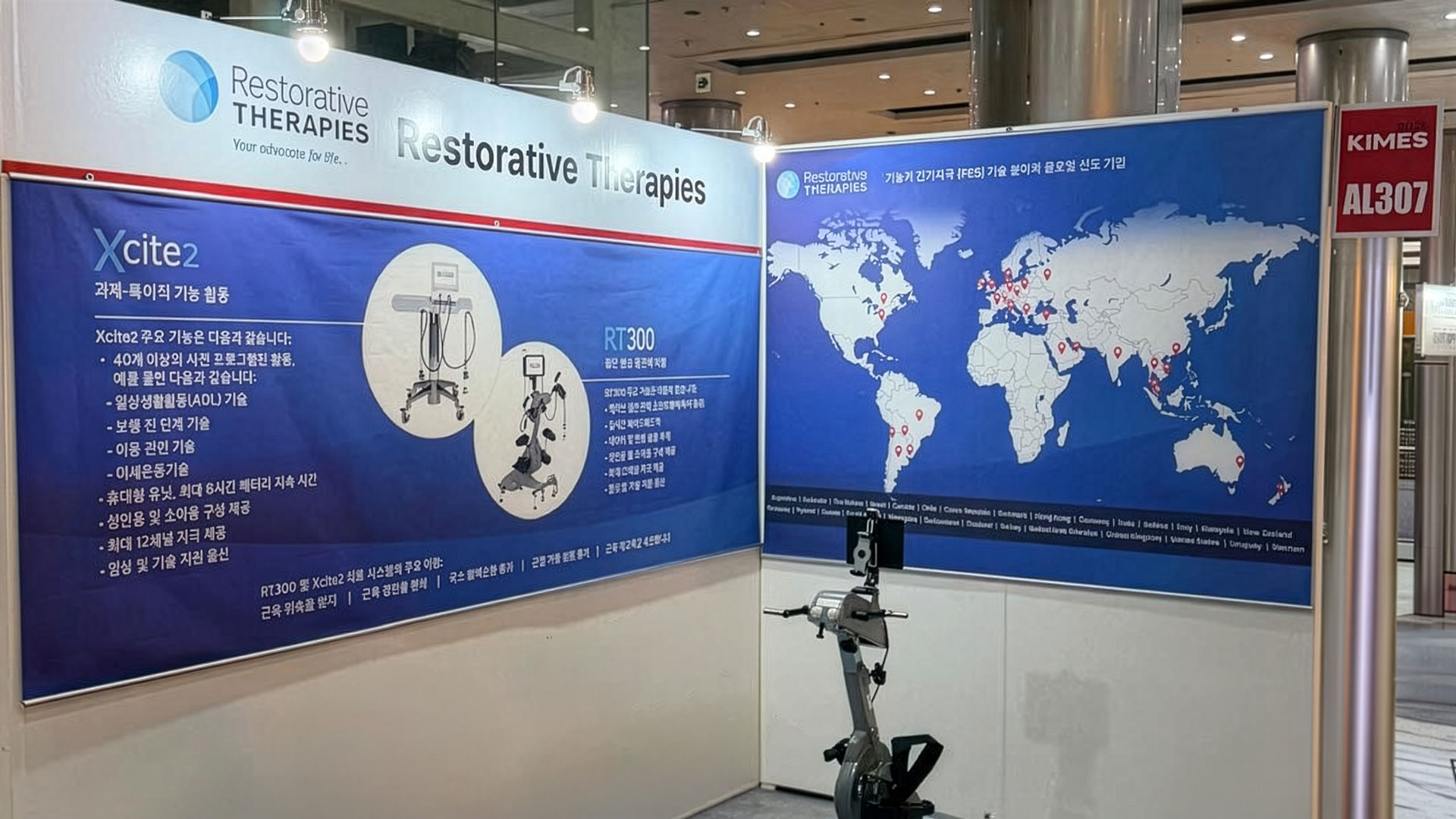
Functional Electrical Stimulation (FES) continues to reshape how clinicians approach neurological rehabilitation for conditions such as stroke, spinal cord injury, and multiple sclerosis. At KIMES 2026, Restorative Therapies is introducing the RT300 FES therapy system to the Korean market, expanding access to advanced technology in neurorehabilitation.
For more than two decades, Restorative Therapies has advanced FES technology not just as a category of devices, but as a clinical philosophy rooted in one core belief: recovery should not be limited by access to the right systems, the right dosage, the right intensity, or the right stage of care. This week at KIMES 2026 in Seoul, South Korea, that philosophy reaches an important milestone with the official debut of the RT300 therapy system in Korea.
From Task-Specific Training to Integrated FES Cycling
Last year at KIMES, Restorative Therapies introduced Korean rehabilitation professionals to Xcite2, its task-specific FES therapy system designed to support functional movement training through targeted muscle activation. The response confirmed what clinicians already know: they need evidence-backed, patient-centered rehabilitation technology that can work in real-world clinical environments.
The RT300 is the natural partner to Xcite2. Where Xcite2 focuses on task-specific functional movement, the RT300 FES therapy system delivers high-repetition FES-assisted cycling that engages the arms, legs, and trunk through patterned electrical stimulation.
Together, the systems form an integrated FES approach to neurorehabilitation: Xcite2 for functional training and RT300 for massed practice and progressive resistance that supports long-term neurological recovery.
This is not two separate devices competing for attention. It is a unified neurorehabilitation solution that helps clinicians support patients across the full continuum of care.
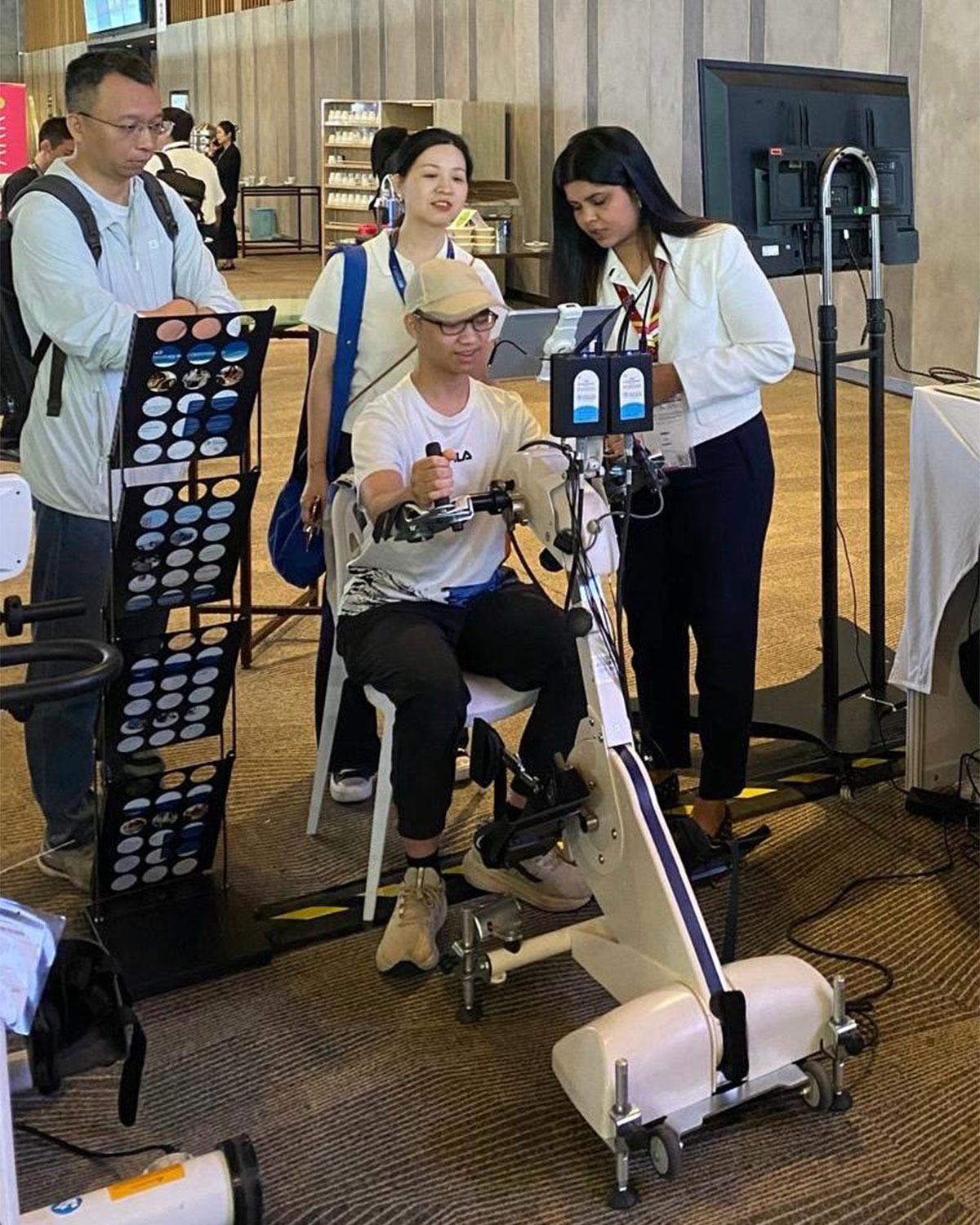
Why Repetition and Intensity Matter in FES Therapy
Neuroplasticity research continues to reinforce that repetition and intensity are two of the most important variables in motor recovery after central nervous system injury. But for patients with paralysis, significant weakness, or impaired motor control, generating enough voluntary movement to reach those thresholds is often unrealistic without assistance.
FES therapy helps bridge that gap. By externally stimulating target muscles, it enables structured, measurable, high-repetition training even when patients cannot initiate or sustain movement on their own.
The RT300 operationalizes this principle in a practical way. Its Active Spasm Management technology detects and responds to spasticity in real time, helping maintain therapy continuity. Its biofeedback system tracks muscle response, symmetry, and performance data throughout therapy sessions. Because the RT300 is designed for both clinical and home use, it supports long-term rehabilitation beyond the clinic.
A Global Stage for a Growing Mission
Restorative Therapies systems are currently used in more than 1,000 rehabilitation clinics and over 5,000 homes worldwide. More than 100,000 patients have experienced therapy using RTI technology.
KIMES 2026 marks the expansion of Restorative Therapies’ integrated FES platform into the Korean rehabilitation market and reflects a broader global strategy: building a connected rehabilitation ecosystem where patients do not have to choose between clinical-grade therapy and accessible long-term care.
For more on RTI’s presence at KIMES 2026 and the RT300 clinical feature set, readers can also review the official
KIMES press release.
Looking Forward
The debut of RT300 in Korea alongside the continued expansion of Xcite2 reflects RTI’s commitment to making FES therapy more clinically meaningful, more globally accessible, and more integrated across the full arc of recovery.
This is what expanding what is possible in neurorehabilitation looks like — one market, one partnership, and one patient at a time.
Frequently Asked Questions About the RT300 Therapy System and FES Therapy
What is FES therapy?
Functional Electrical Stimulation, or FES, therapy uses controlled electrical impulses to activate muscles and support movement in people with neurological impairments such as stroke, spinal cord injury, brain injury, or multiple sclerosis.
What is the RT300 used for?
The RT300 FES therapy system supports high-repetition cycling-based rehabilitation for the arms, legs, and trunk, helping patients participate in structured neurorehabilitation even when voluntary movement is limited.
Who can benefit from the RT300 FES Cycle?
The RT300 FES Cycle may benefit patients with paralysis, stroke, spinal cord injury, multiple sclerosis, and other neurological conditions that affect movement, strength, and endurance.
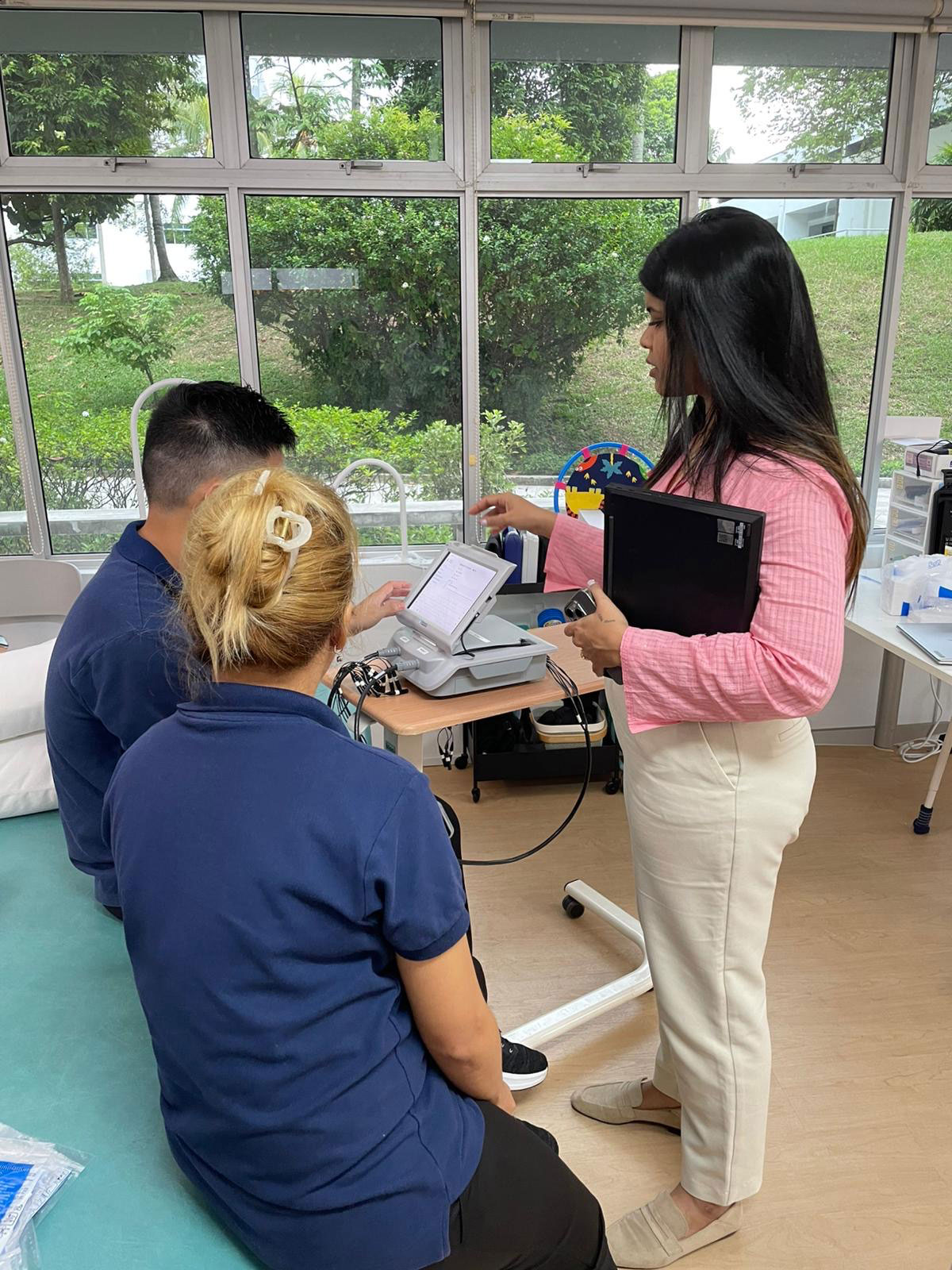
Want to learn more about how the RT300 and Xcite2 therapy systems can improve patient outcomes?
Visit restorative-therapies.com to explore how Restorative Therapies supports clinicians and patients in the neurorecovery journey.